


 The visit is part of the university's initiative under the Vice Chancellor Special Project (VCSP). Professor Ferid Murad, is an Albanian-American physician and phamacologist, a co-winner of the 1998 Nobel Prize in Physiology or medicine for the discoveries concerning nitric oxide as a signaling molecule in the cardiovascular system. According to his available biography, ...
 Prof Murad's key work was in showing that nitroglycerin and related drugs worked by releasing nitric oxide into the body, with the gas somehow acting as a signaling molecule, making blood vessels dilate. The biography asserts further that the missing steps in the signaling process were filled in by Furchgott and Ignarro, for which the three shared the 1998 Nobel Prize.
 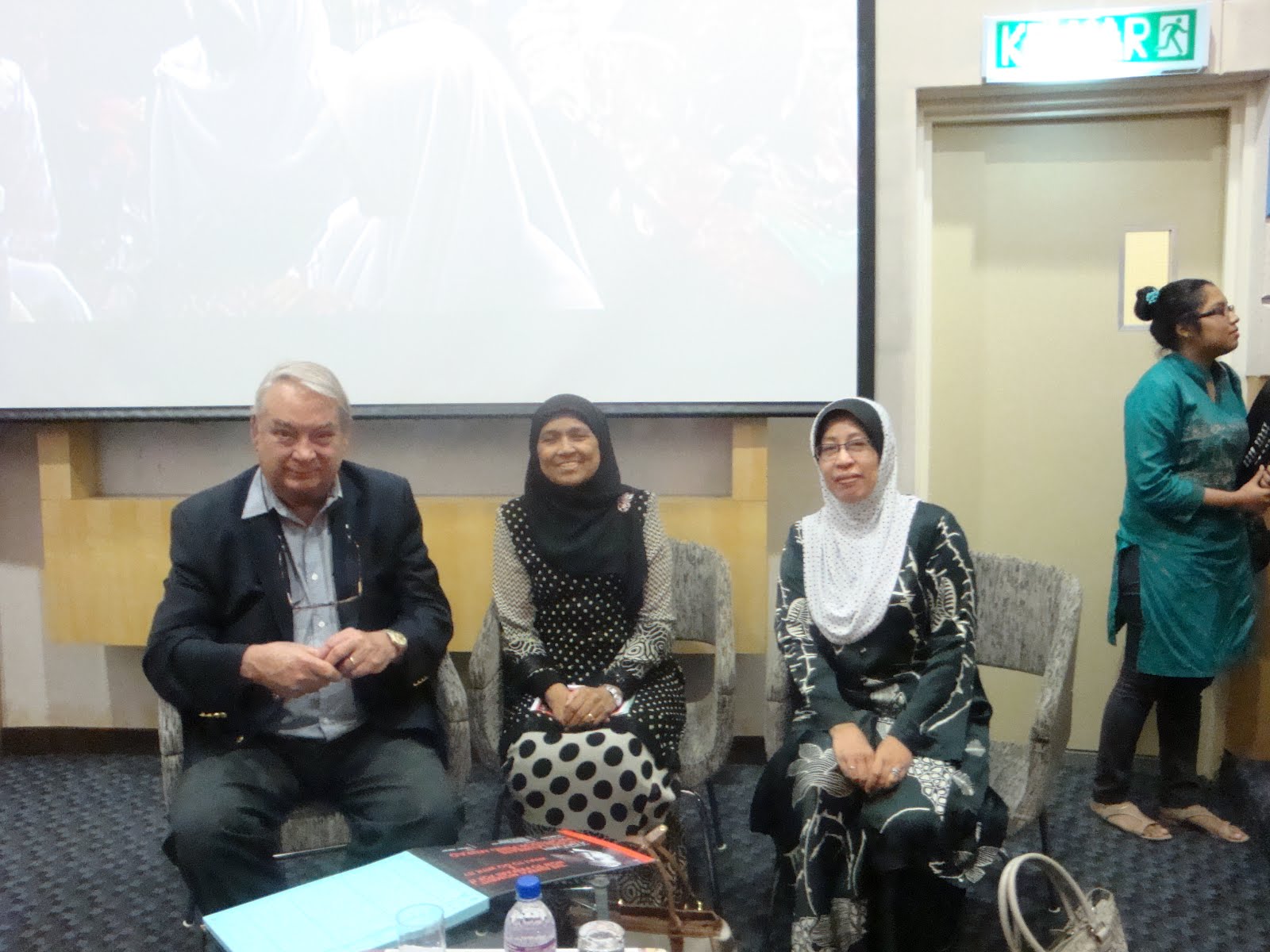 The past one week has been filled with various activities which included among others a public lecture of "Sharing the Noble Laurette Journey" with university community and the public; meeting various scientific fraternities; television and other media appearance; Intellectual discourse with the medical research community and post graduate students.
  Today, Prof Murad has been awarded with the Asia Pacific Brand Laurette at a special function organized by the Faculty of Medicine, Selayang Campus. Two researchers from the Accounting Research Institute (ARI)- Prof Dr Normah and Associate Prof Dr Roshayani - have been invited to the meeting. The opportunity to meet up and close with Professor Ferid Murad has been a memorable event for all of us. When asked "how he did it?", one "take home" message from Prof Murad is the need to have a team who can share and effectively work on the project. For him, his teams are his research fellows and co-researchers....
 who are undertaking the Master in Forensic Accounting and Financial Criminology presented their case studies involving money laundering offences. Selected cases presented by the groups today included those that have been committed in countries such as Canada, United States of America, Australia, Malaysia and Columbia. In Malaysia, the jurisdiction covering money laundering offences is covered by the Anti Money Laundering and Anti Terrorism Financing Act (AMLATFA) 2001.
  Money Laundering is a process to disguise illegal proceeds from their criminal origin so as to avoid suspicion of law so as to avoid suspicion of law enforcement and to prevent leaving a trail of incriminating evidence. It is a process to make dirty money to appear ´clean´. The three stages of money laundering are namely Placement (i.e. the placement of money into financial institution); Layering (creating complex layers of financial transactions designed to disguise illegal
  proceeds from their original source) and Integration (turning of illegal proceeds into legitimate economy and to make them appear as ordinary and legitimate earnings). Among the issues highlighted in the presentations included the multi-layering of illegal proceeds that makes the whole process looks very complex and complicated. Further, the involvement of transnational and cross-border crimes also necessitate our anti money laundering investigators to involve their global counterparts into the investigation process.
 and Mr Armey Jefri (Researcher, Supply Chain Division) for recently hosting ARI researchers at MAI office in Cyberjaya. Professor Dr Normah Omar and her PhD student Mr Hussein had an initial discussion with MAI officers for a possible UiTM-MAI research collaboration in the area of Target Costing Implementation Decision and Organizational Capabilities by Malaysian Automotive Manufacturing Companies. From the meeting, it was basically agreed that the proposed research collaboration will embark very soon.
  MAI was incorporated on 16 April 2010, to function as an independent non-profit organization under the custodian of MITI and was officially launched on 10 June 2010. It acts as a focal point and a coordination centre for the development of the local automotive industry in all matters related to automotive industry including the formulating of the national automotive policy, managing manpower development programme, formulating and coordinating automotive related research and development.
 . Currently Professor Dr yed Noh is a member of MACC Operation Review Panel (ORP). At a recent press conference the MACC Academy in Kuala Lumpur, the committee members of the ORP (Prof Syed Noh from UiTM is seated in the middle)made a recommendation for MACC to initiate investigation on a few high profile corruption cases. Prof Syed Noh's expertise is in analysing financial statement fraud.
 The one-day workshop was attended mainly by Prof Bond's Rasch Model facebook group in Malaysia. Basically this group comprises researchers who are opting to use rasch model analysis to analyse their data. They probably have posted their questions and queries on the facebook before the workshop. Three researchers from ARI participated in the workshop discussion. Professor Bond will be leaving for Australia early tomorrow morning. Thank you sir.


 According to wikipedia, Rasch models are particularly used in psychometrics, the field concerned with the theory and technique of psychological and educational measurement. In addition, they are increasingly being used in other areas, including the health profession and market research because of their general applicability. The mathematical theory underlying Rasch models is in some respects the same as item response theory. However, proponents of Rasch models argue it has a specific property that provides a criterion for successful measurement. Application of the models provides diagnostic information regarding how well the criterion is met. Application of the models can also provide information about how well items or questions on assessments work to measure the ability or trait.

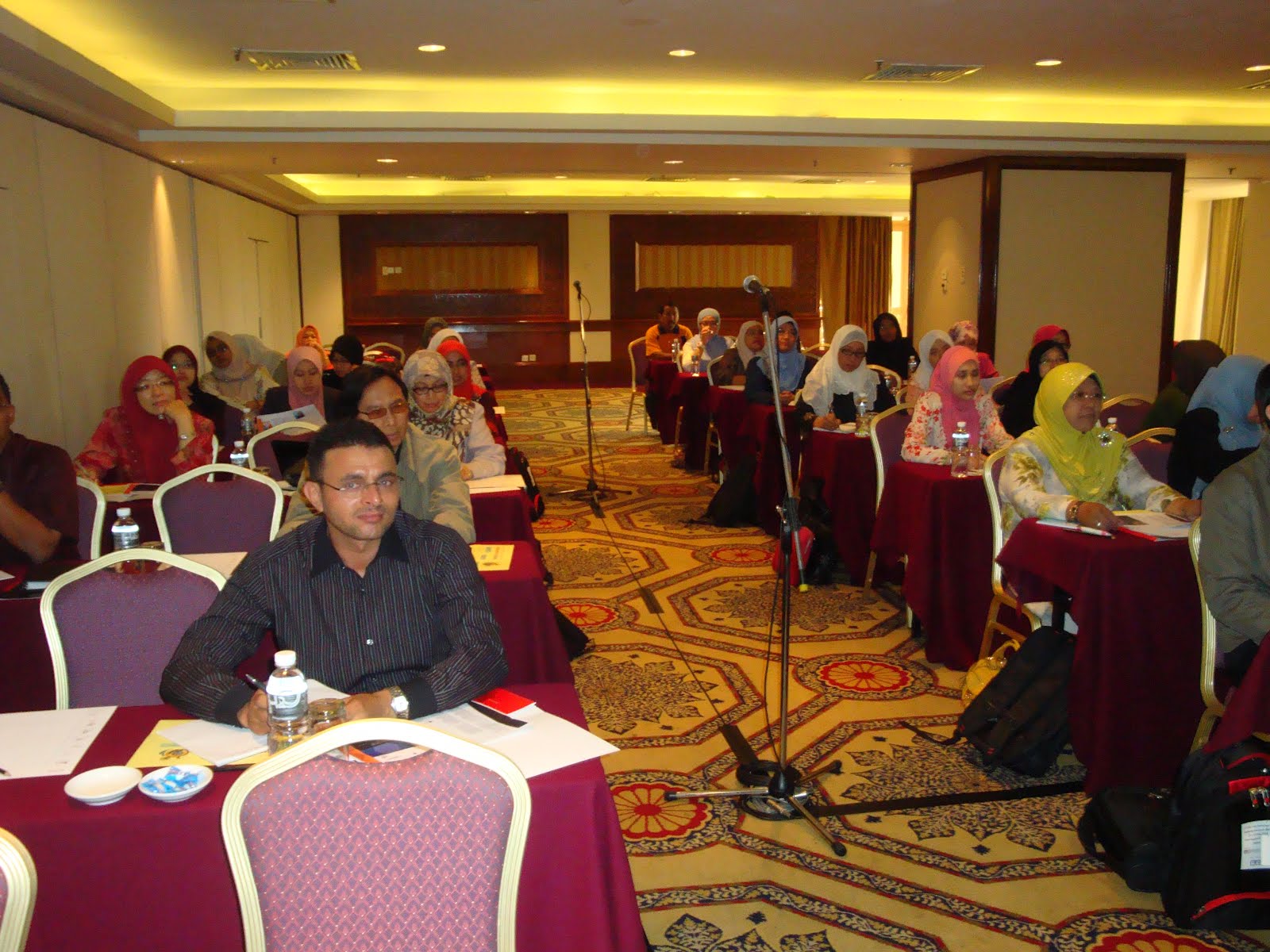

 Professor Dr Faridah Hassan, Dean of the Faculty of Business & Management, Universiti Teknologi MARA (UiTM); Professor Trevor Bond & Professor Klaus Georg Oestreicher (both are key note speakers); Professor Dr Normah Omar of the Accounting Research Institute (ARI)and Professor Dr Raja Suzana, the conference chair. ICIMTR 2012 has originally received more than 280 papers but only 75 of them "passed" the blind review process. A total of 50 international participants from more than 25 countries are attending the two-day conference.