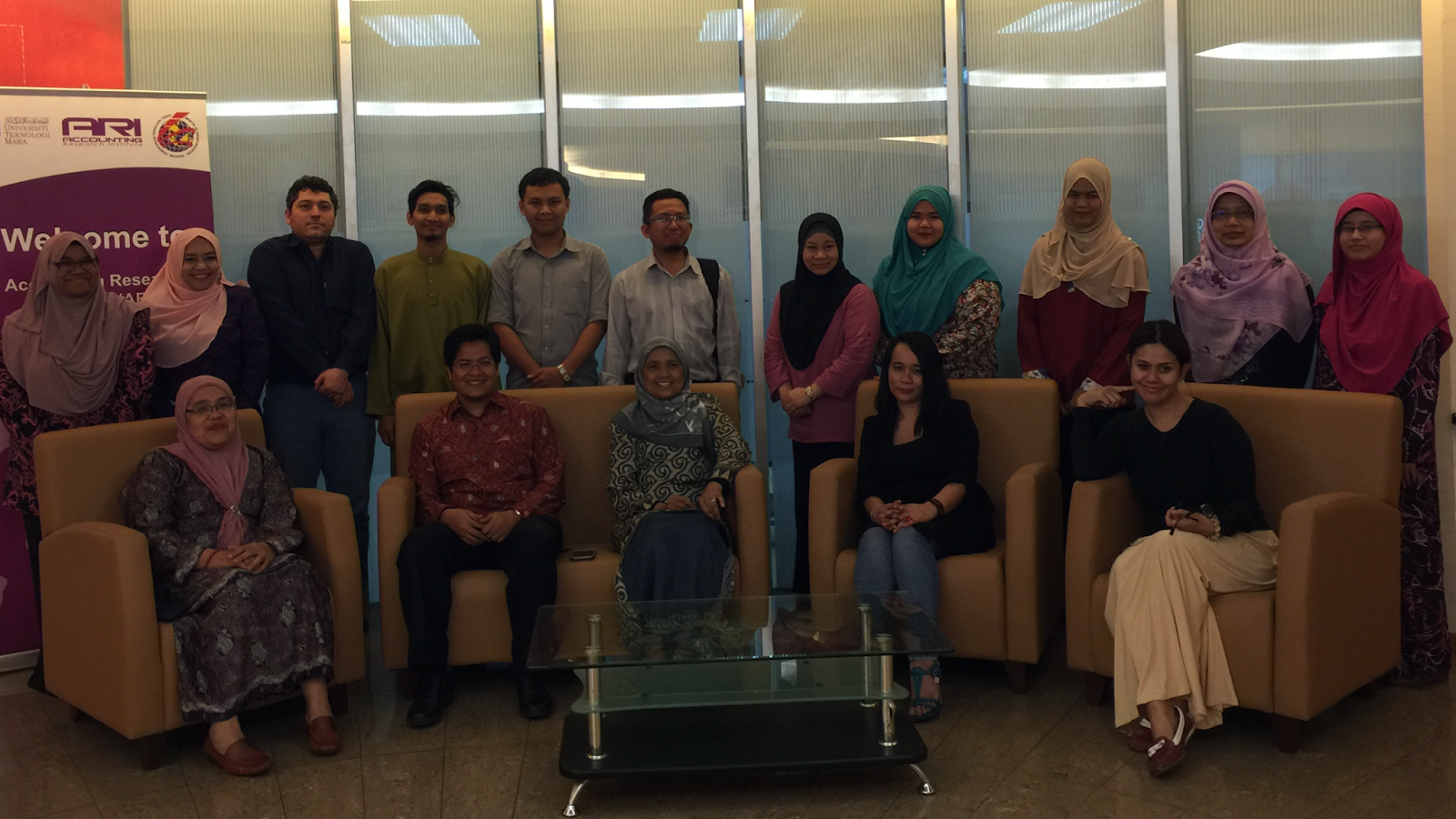
The Accounting Research Institute (ARI) thanks Dr Yuliansyah, from Universitas Lampong, Indonesia for accepting our invitation to provide research training to our research fellows and postgraduate students on the use of NVivo. Dr Yuliansyah is a qualified NVivo trainer and has conducted many NVivo training in Indonesia, Malaysia and in other universities in the Asian region. NVivo is a qualitative data analysis (QDA) computer software package produced by QSR International. It has been designed for qualitative researchers working with very rich text-based and/or multimedia information, where deep levels of analysis on small or large volumes of data are required. NVivo is used predominantly by academic, government, health and commercial researchers across a diverse range of fields, including social sciences such as anthropology, psychology, communication, sociology, as well as fields such as forensics, tourism, criminology and marketing.
Higher Institutions' Centre of Excellence MALAYSIA: Driving Research in Islamic Financial Criminology & WINNERS OF GLOBAL ISLAMIC FINANCE AWARDS 2014,2015, 2016 & 2017; ACQ GLOBAL AWARDS 2015 & 2016 and ASEAN Risk Management Award 2016 & 2017; Global Good Governance Awards 2017
Showing posts with label research training. Show all posts
Friday, November 27, 2015
Sunday, April 13, 2014
ARI-PBBM Integrated Training and Conference 2014 - Day Five
Day Five
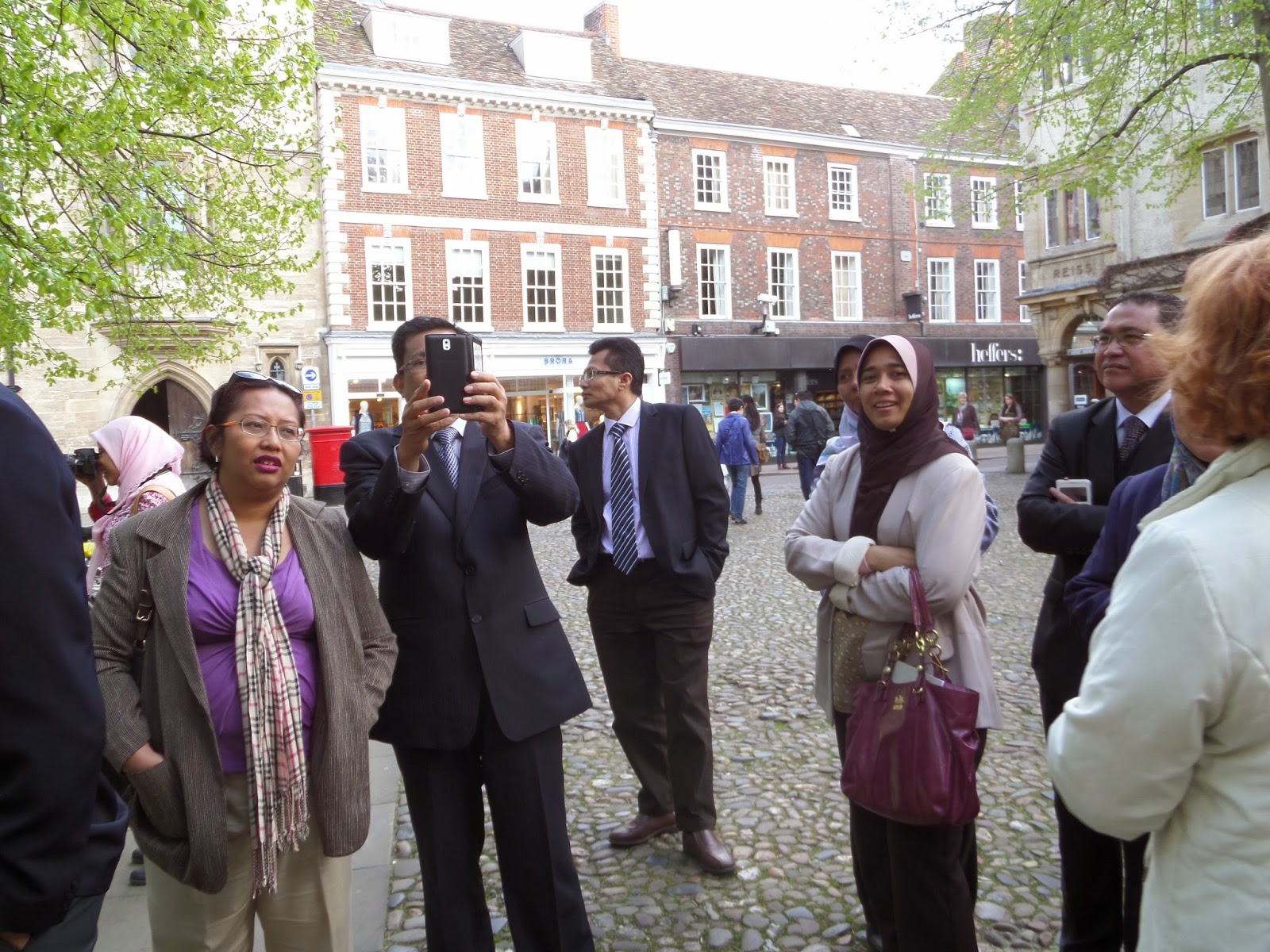
In the morning, we visited more interesting sites of London City - London Bridge, Tower of London, Albert Hall, Kensington Palace and Wembley Stadium. Later in the afternoon, we traveled to Cambridge, a city which is about one hour away from London. The city of Cambridge is a university town and the administrative centre of the county of Cambridgeshire, England. It lies in East Anglia, on the River Cam, about 50 miles (80 km) north of London. Cambridge City has a population of about 150,000 (including 30,000 students). Cambridge is most widely known as the home of the University of Cambridge, founded in 1209 and consistently ranked one of the top five universities in the
world. The university includes the renowned Cavendish Laboratory, King's College Chapel, and the Cambridge University Library. Tomorrow, we will have a whole day event at Cambridge University. Interestingly, there is no "boundry line" between the university (the gowner) and the town (towner). In fact, there is no specific location of what constitutes the "university campus". The university and the city represent a unique blend of history, knowledge and development.
Wednesday, January 9, 2013
Workshop on “Structural Equation Modeling (SEM)
A two
day workshop on “Structural Equation
Modeling (SEM)” was held from 8 to 9 January 2013 at the Computer Lab 1.
The Accounting Research Institute had invited Dr. Adewale Abideen Adeyemi from
the International Islamic University Malaysia to run this workshop. The
main objective of the workshop is to introduce participants to” basic to
intermediate level” appreciation of Structural Equation Modelling (SEM), based
on real data. Specifically, the workshop is meant to enhance participants’
hands-on capability to use the IBM SPSS AMOS 20 software to carry out multi
variate data analysis.
The
topics covered in this workshop include, but are not limited
to Exploratory Factor Analysis, 1st Order Confirmatory Factor Analysis, 2nd
Order Confirmatory Factor Analysis, Construct Reliability, Convergent and
Divergent Validity, Metric and Configural Invariance Analysis, Common Method
Bias, Full-fledged Structural Model, Multi-group Structural Analysis, Data
Imputation, Testing Mediated Effect (Partial and Full Effects) and Nested Models.
The
event was well received by the attendees, as shown by their enthusiasm during
the Q&A session as well as their zealous discussion on the topic.
Subscribe to:
Posts (Atom)