Friday, May 27, 2016

Publication in High Impact Journal

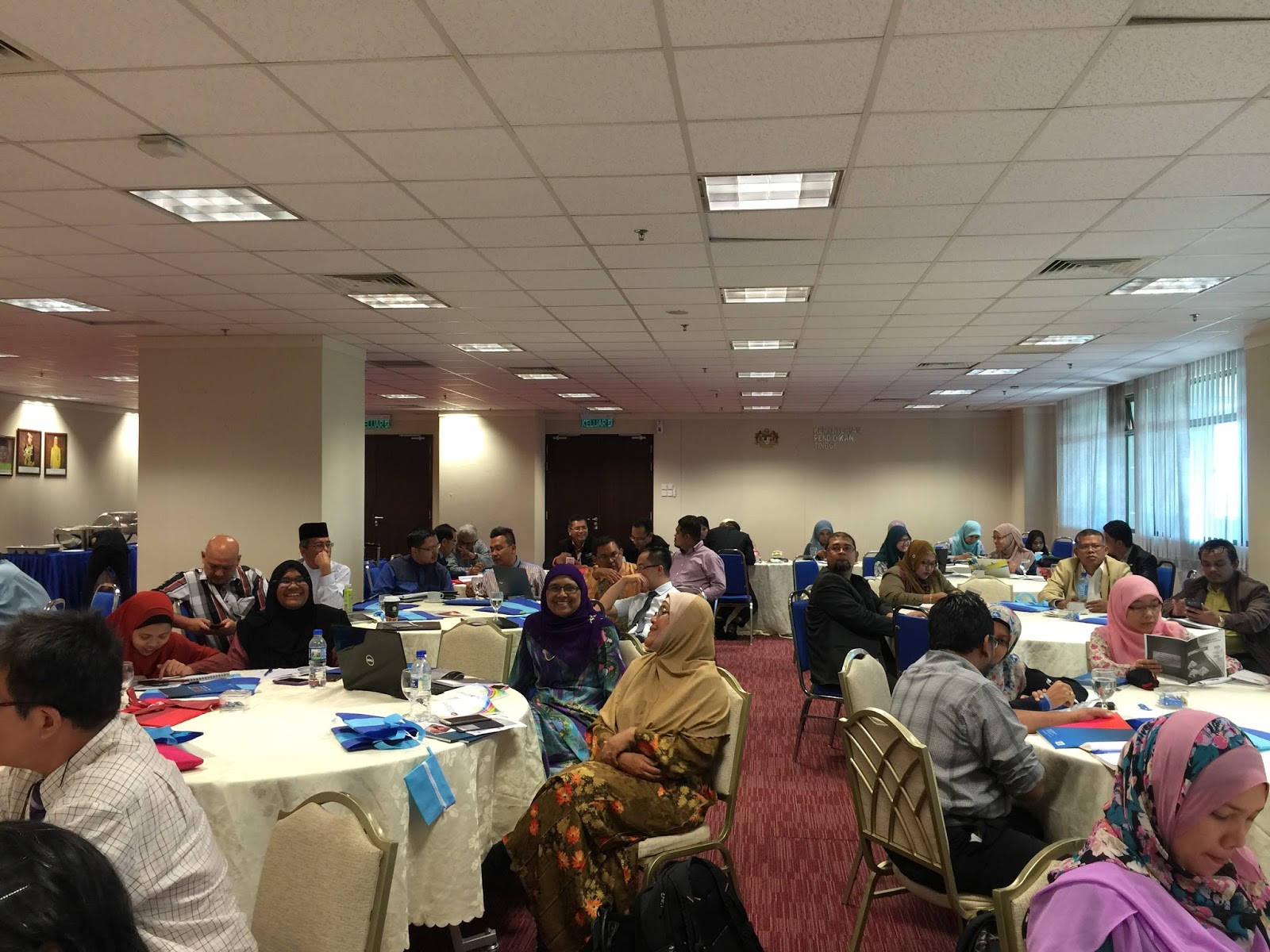
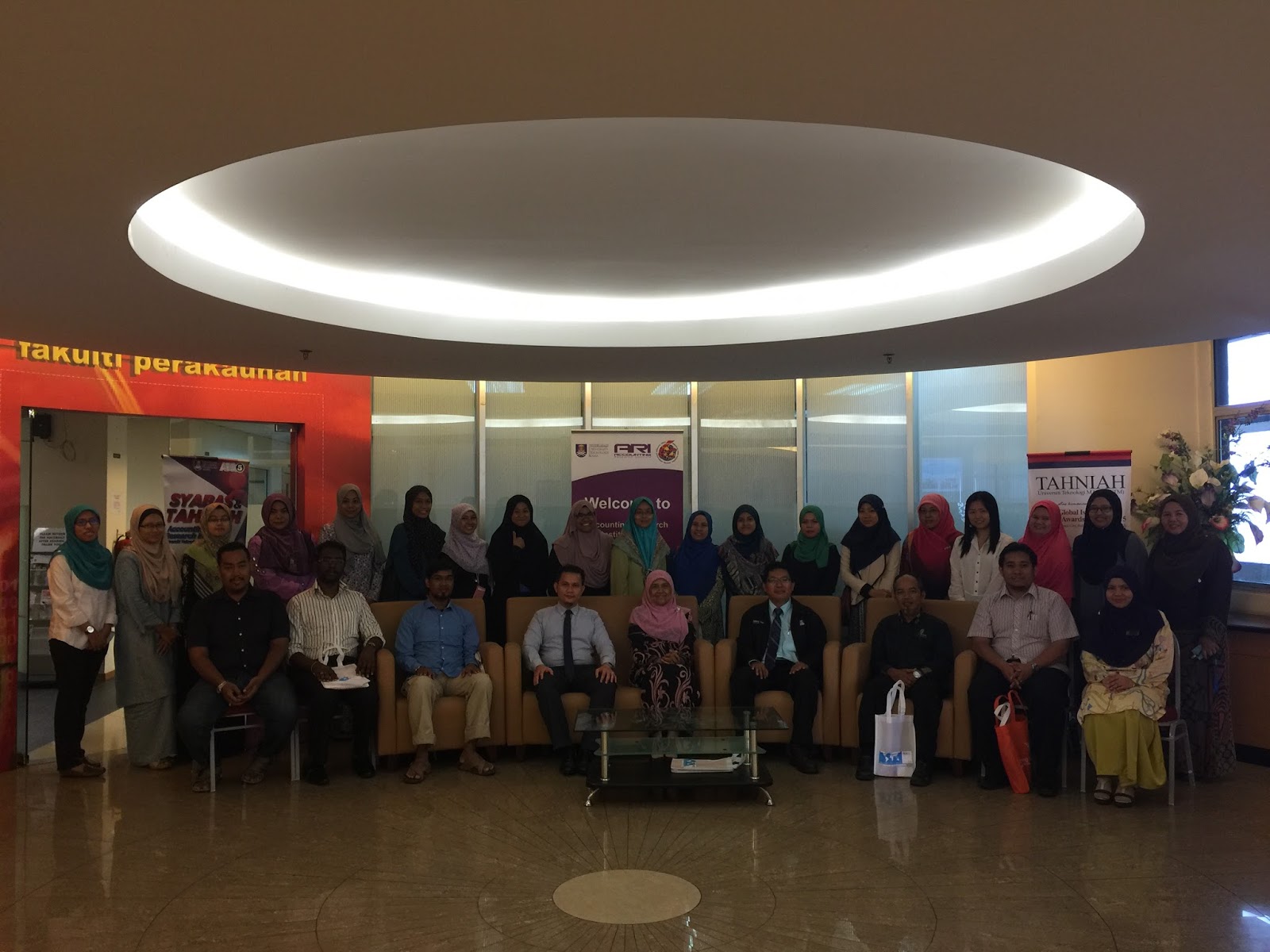
The Accounting Research Institute (ARI HICoE), in collaboration with the Institute of Research Management and Innovation (IRMI) recently organized a three-day publication workshop at the De Palma Hotel in Shah Alam.  A total of 77 participants took part in the workshop.  Following ARI's previous successful workshop in February 2016, the recent workshop invited participants from various faculties namely Faculty of Business Management, Faculty of Hotel and Tourism Management, Faculty of Music, Faculty of Information Management, Faculty of
Accountancy, Universiti Teknologi MARA Melaka and researchers from the ARI HICoE.
 Participants were required to bring at least one full article to the workshop.  The workshop organiser (ARI) has also appointed three English editors from the Language Academy of UiTM and facilitators from respective groups.  The aim of the workshop was to identify suitable indexed journals for the papers and to submit the paper by the end of the workshop.  Although the initial target was a submission of 100 articles, the workshop participants were able to submit a total of 110 articles to various journals indexed in SCOPUS, Thomson Reuters and Excellence Research Australia directories.  Congratulations all.

Thursday, April 28, 2016

UiTM-Burgas University ERASMUS Outbound Program

The Accounting Research Institute (ARI) congratulates three UiTM scholars and researchers who have been chosen to participate in the Erasmus+ Staff Mobility for Teaching Mobility programme that has been initiated by Burgas-Free University in Bulgaria.  Burgas Free University has been awarded the Erasmus Charter for Higher Education (ECHE) for the full duration of the Erasmus+ programme 2014-2020. The ECHE provides the general quality framework for European and international cooperation activities to be carried out within the Programme. In September 2014, Universiti Teknologi MARA through the Accounting Research Institute signed a Memorandum of Understanding (MoU) with Burgas Free University.  Apart from research collaboration, the MoU proposed staff exchange program, hence Burgas Free University made an application for the Erasmus + Staff Mobility for Teaching Mobility programme.  Three academic staff from Burgas Free University who will be visiting Universiti Teknologi MARA between May to July 2016 are namely Professor Milen Baltov, Professor Lina Anastassova and Associate Professor Dr Tatyana Kotzeva.  Meanwhile, UiTM will be sending Associate Professor Dr Mohamad Abdullah Hemdi, Dean, Faculty of Hotel Management and Tourism; Associate Professor Dr Faizah Darus, ARI Senior Fellow, and Associate Professor Dr Haslinda Yusoff, ARI Associate Fellow.  The trio will be visiting Burgas Free University for a duration of one week between May to September 2016.  

Wednesday, April 20, 2016

Journal Indexing with ACI and SCOPUS

Yesterday, the Malaysian Citation Index (MyCite) Centre, a department within the Ministry of Higher Education organised a 1-day meeting and workshop with representatives from two international indexing bodies: Asean Citation Index (ACI) and SCOPUS from the Elsevier Publication Group. Basically the aim of the meeting cum workshop was to provide exposures to Malaysian journal editors on options available for their journals.  About 100 Malaysian journal editors attended the meeting.  The ACI is a central regional database which was designed and set up to index all the bibliographic records and the citations of all quality ASEAN research outputs appeared in the ASEAN scholarly journals. The member countries of the ACI are Brunei Darussalam, Cambodia, Indonesia, Lao PDR, Malaysia, Myanmar, the Phillippines, Singapore, Thailand, and Vietnam.  Currently, ACI is head-quartered in Thailand.  The Thai's Office of the Higher Education Commission (OHEC) has provided initial financial support for the development and implementation of the ACI database system in 2 phases since 2011. The first phase (2011-2013) ended in 2013 and the second phase will cover 2014-2016.  
The ACI has the ACI Steering Board, which comprises 2 representatives nominated by the Ministry of Education from each member country, to set up policy and monitor the ACI performance and development. The Board will meet twice a year in each member country to share experiences, monitor the performance, and discuss further development of the ACI.  Meanwhile, Elsevier's SCOPUS is the largest abstract and citation database of peer-reviewed literature: scientific journals, books and conference proceedings. Delivering a comprehensive overview of the world's research output in   the fields of science, technology, medicine, social sciences, and arts   and humanities, Scopus features smart tools to track, analyze and   visualize research.  

Tuesday, April 19, 2016

Researchable Topics in Money Laundering Control

In view of increasing trends in money laundering offences and its potential negative impacts on a country's economy, there are currently various "hot topics" that researchers can explore for their research work.  Listed below are proposed topics that can be undertaken:

  1. AML-CFT Regime in Emerging Economies: A Cross-Country Study
  2. The Proceeds of Crime: Problems of Investigation and Prosecution
  3. Dirty Money: The evolution of money laundering counter-measures.
  4. Money-Laundering in the Twenty-First Century: Risks and Countermeasures.
  5. A Comparative study on the criminalization of money laundering activity in a selected region
  6. Compliance with the AML/CFT International Standard: Lessons from a Cross-Country Analysis
  7. The Regulation of Mobile Money in Emerging Markets
  8. Assessment of  Money Laundering and Financing of Terrorism (ML/FT) Risks in non-profit organisations
  9. Customer Risk Assessment within AML/CFT Framework
  10. Due Diligent and Know Your Clients Analysis Among Designated Non-Financial Businesses and Professions
  11. Financial Action Task Force Evaluation of AML-CFT International Standards and Their Effectiveness
  12. Trade-Based Money Laundering and Financial Trail Analysis
  13. Transfer-Pricing Manipulation and Tax Evasion of MNCs in Tax Heaven Jurisdictions


9.        

Monday, April 18, 2016

Financial Action Task Force (FATF) to Mitigate Money Laundering Offences

Due to the complexities of money laundering activities and their potential negative impacts towards a country's economic growth, there are a lot of agencies being set up to monitor and mitigate money laundering offences.  At the international level, one very prominent agency is the Financial Action Task Force (FATF).  FATF is an inter-governmental body established in 1989 during the 1989 G7 Summit in Paris to combat the growing problem of money laundering. The task force was charged with studying money laundering trends, monitoring legislative, financial and law enforcement activities taken at the national and international level, reporting on compliance, and issuing recommendations and standards to combat money laundering. At the time of its creation, the organisation had 16 original members.  Today, there are 37 FATF country members (Malaysia included), 2 FATF Observers and 9 FATF Associate members (APG, CFATF, MONEYVAL, EAG, ESAAMLG, GAFILAT, GIABA, MENAFATF and GABAC. 


The objectives of the FATF are to set standards and promote effective implementation of legal, regulatory and operational measures for combating money laundering, terrorist financing and other related threats to the integrity of the international financial system.  The FATF is therefore a “policy-making body” which works to generate the necessary political will to bring about national legislative and regulatory reforms in these areas.  The FATF has developed a series of Recommendations that are recognised as the international standard for combating of money laundering and the financing of terrorism. They form the basis for a co-ordinated response to these threats to the integrity of the financial system and help ensure a level playing field.  First issued in 1990, the FATF Recommendations were revised in 1996, 2001, 2003 and most recently in 2012 to ensure that they remain up to date and relevant, and they are intended to be of universal application. The FATF monitors the progress of its members in implementing necessary measures, reviews money laundering and terrorist financing techniques and counter-measures, and promotes the adoption and implementation of appropriate measures globally.  In collaboration with other international stakeholders, the FATF works to identify national-level vulnerabilities with the aim of protecting the international financial system from misuse. There's a lot of interest among researchers to explore topics in Money laundering research.  The Accounting Research Institute (ARI) has established a dedicated research cluster to conduct research on money laundering-related issues.

Sunday, April 17, 2016

Understanding Money Laundering Offences

Money laundering constitutes a generic term used to describe a predicate crime.  A predicate offence is a crime that is a component of a more serious criminal offence. For example, generating proceed of crime through fraud or criminal-breach of trust (CBT) is the main offence and money laundering is the predicate offence when the original ill-gotten proceeds are disguised and cleansed so that such proceeds appear to have derived from a legitimate source. In Malaysia, the Second Schedule of the Anti-Money Laundering, Anti-Terrorism Financing and Proceeds of Unlawful Activities Act (AMLATFPUAA 2001) has outlined various sections and sub-sections of forty two legislations that are considered as predicate offences.  In practice almost all serious crimes, including, criminal breach of trust, drug trafficking, human trafficking, tax evasion, terrorism, fraud, robbery, prostitution, illegal gambling, arms trafficking, bribery and corruption are capable of predicating money laundering offences in most jurisdictions. 

The processes by which criminally derived proceeds (These proceeds can be in the forms of cash, assets/property, donations or investments) may be laundered are extensive. Though criminal money may be successfully laundered without the assistance of the financial sector, the reality is that hundreds of billions of dollars of criminally derived money is laundered through financial institutions, annually. The nature of the services and products offered by the financial services industry (namely managing, controlling and possessing money and property belonging to others) means that it is vulnerable to abuse by money launderers.  Today, money launderers are opting for other forms of institutions to launder their illegal proceeds.  Institutions such as non-profit organisations, co-operatives, money changers, designated non-financial businesses and professions (DNFBPs) such as accountants, lawyers, real estate agents, company secretaries, and casinos are now becoming popular targets for money laundering.

There are typically three stages of the money laundering process: Placement, Layering and Integration.  Placement is the movement of cash/fund from its original source. Often disguised, it is placed into circulation by putting it through financial institutions, casinos, shops, bureau de change and other businesses, both local and abroad. Layering is a process where monies are placed into multiple and complex transactions with the sole purpose of making it difficult for the law enforcement agencies to detect the financial trails of money laundering activities.  Integration is the movement of cleansed laundered money into the mainstream economy.  Now that the laundered money appears cleaned, money launderers will use the normal banking system to place such monies which appear to be normal business earnings. 

Wednesday, April 13, 2016

Strategies to Increase Your Citation Count

The American Journal Experts (AJE) proposes 10 easy ways how researchers can increase their citation count. (please go to www.aje.com to  source for other services)


1. Cite your past work when it is relevant to a new manuscript. However, do not reference every paper you have written just to increase your citation count.
2. Carefully choose your keywords. Choose keywords that researchers in your field will be searching for so that your paper will appear in a database search.
3. Use your keywords and phrases in your title and repeatedly in your abstract. Repeating keywords and phrases will increase the likelihood your paper will be at the top of a search engine list, making it more likely to be read.
4. Use a consistent form of your name on all of your papers. Using the same name on all of your papers will make it easier for others to find all of your published work. If your name is very common, consider getting a research identifier, such as an ORCID or a ResearcherID. You can provide your
ResearcherID in your email signature and link that ID to your publication list so that anyone you email has access to your publications.
5. Make sure that your information is
correct. Check that your name and affiliation are correct on the final proofs of your manuscript and check that the paper’s information is accurate in database searches.
6. Make your manuscript easily accessible. If your paper is not published in an open-access journal, post your pre- or post-publication prints to a repository. Check SHERPA RoMEO to find your publisher’s copyright and self-archiving policies regarding sharing your published manuscript.
7. Share your data. There is some evidence that sharing your data can increase your citations. Consider posting to data sharing websites, such as figshare or SlideShare, or contributing to Wikipedia and providing links to your published manuscripts.
8. Present your work at conferences. Although conference presentations are not cited by other others, this will make your research more visible to the academic and research communities.
9. Use social media. Provide links to your papers on social media (e.g., FacebookTwitter,Academia.eduResearchGateMendeley) and your university profile page.
10. Actively promote your work. Talk to other researchers about your paper, even ones not in your field, and email copies of your paper to researchers who may be interested. Create a blog or a website dedicated to your research and share it.


Further details can be found on


ARI's Educational Visit to the Seoul Central Mosque

Whilst in Seoul, Korea, ARI and PBBM's delegates visited Seoul Central Mosque.  The Imam of the mosque Mr. A. Rahman Lee Ju-Hwa. Imam Rahman provided a brief overview of Islam and Muslim community in Korea. Though Islam is the second largest religion by number of adherents in the world, it is still a minor religion in South Korea. Most of these Muslims in Korea centred in Seoul, the capital territory of South Korea, where the Seoul Central Mosque was built in 1976.  The building of the mosque was funded by the Malaysian Islamic Mission and other Islamic countries.

Presently there are 15 mosques and  16 musallah have been operating nationwide to facilitated Muslims in Korea. Nowadays, 35000 Korean native Muslims live in the country and about 40000 Muslims were immigrated from other Muslim countries such as; Indonesia that makes the total number of 100000 and above.  During Ramadan the mosque organizes Iftar and around 500-600 people attend the event every day. Embassies of Muslim countries support the mosque and share the fund for Iftar. Other than that, the mosque increases their income through getting donation and contribution, providing halal certificate and other financial support from Muslim countries such as; Saudi Arabia and Turkey. The mosque also performs Dawah and teaching for new Muslims, explaining the Quran during weekend and Madrasah facilities. Every year about 100 people convert to Islam. Moreover, more than 300 Koreans had visited the mosque during the weekend just to know more about Islam. The mosque already took the initiative to translate the Quran in the Korean language. They believe it could be more useful for newly converted Muslims in Korean to know about Islam in their own language.
The mosque also issues Akad certificate of Muslim marriage in Korea. The Korean Muslim Federation monitor and operate the mosque through their board of Shariah council. Every year around 100-150 Muslims perform their pilgrim (Haj) among both native and immigrated Korean.  Not surprisingly, Muslims community in Korea also affected by the Islamophobia in the present time. Issues like ISIS and terrorist attack in various countries present negative and false perception of Islam. It's more in the society where Muslims are the minority and that's the same thing happening in Korea as well. However, the growing of Islam in Korea is still precious.  After the talk session delegates asked questions to the Imam to know more about Muslims community and situations of Islam in Korea. They also placed inquiries about participation of foreign Muslims in the Korean Muslim communities.

ARI's Forum on GST After One Year of Its Implementation

On 31st March 2016, Goods and Services Tax (GST) implementation "celebrated" its first anniversary in Malaysia.  There were a lot of write ups on GST implementations.  Wong and Partners, a Member Firm of Baker & McKenzie International, for example highlighted some key facts and figures which it had "gleaned" from recent press statements by the Royal Malaysian Customs and Ministry of Finance:


(i) 406,000 companies have registered for GST as at March 2016 , (ii) GST collection for 2015 is said to have exceeded the initial target of RM 27 billion (total amount not finalised yet due to expected refunds); (iii) RM800 million GST refunds are still pending or being processed; (iv) Customs expects to raise RM39 billion from GST for 2016; and (v) 1,190 GST-related cases are being investigated by Customs as at 31 January 2016.  In view of these interesting findings, the Accounting Research Institute (ARI) organizes a half day GST forum with the Royal Malaysian Customs (RMC), SME Corp and thirty representatives from the industries who were directly affected by the GST system.  The main objectives of the forum was firstly to provide a useful platform for both regulators and practitioners to exchange ideas about GST implementation and to propose ideas for improvements.  Since today's group has mainly involved SME companies, the forum also hopes to obtain first-hand feedback from manufacturing and service firms on prospects, challenges and issues related to GST Implementation by the SME industry.  ARI plans to organise similar forums in all the states in Malaysia within the next three months.  ARI thanks speakers Ms Annie Thomas from RMC and Mr Nik Mohd Zainul Kamarun from SME Corp.

Tuesday, April 12, 2016

Reception by the Embassy of Malaysia, Seoul

Delegates of the Accounting Research Institute (ARI) and Persatuan Badan Berkanun Malaysia (PBBM) participated in the reception by the Embassy of Malaysia, Seoul. ARI delegates were headed by the Assoc. Prof. Dr. Jamaliah Said, Deputy Director of the Accounting Research Institute. On the other hand, Ms. Noor Aida Binti Misran, First Secretary (Training & Education) received ARI and PBBM delegates to the embassy. The meeting was carried out in many folds, but Malaysian students’ life in Korea tool the major attention. Delegates of ARI & PBBM, and embassy officials discussed more about language and cultural challenges that faced by Malaysian students in Korea. In addition, the embassy said, there are about 300 Malaysian students currently studying in various Korean universities.  The team consists of 8 delegates from PBBM namely; Esrifaridz Subohi (PTPTN), Azhar Ahmad (PTPTN), Noraini Mustafa (LHDN), Baharudin Atan (SSM), Janatul Almas Mohammad (SSM), Azli Aizam Nawawi (SSM), Abd Razak Omar (PERKESO) and Col. (B) Shahrir Hashim. Apart from them, there were 14 delegates from ARI, UiTM namely; Assoc. Prof. Dr. Jamaliah Said (ARI), Assoc. Prof. Dr. Zuraidah Mohd Sanusi (ARI), Prof. Dr. Ruhaya Atan (ARI), Assoc. Prof. Dr. Rohaya Md. Noor (UiTM), Assoc. Prof. Dr. Amrizah Kamaluddin (UiTM), Assoc. Prof. Dr. Haslinda Yusoff (UiTM), Dr. Farizal Mohammed (UiTM), Assoc. Prof. Dr. Erlane Ghani (UiTM), Dr. Rahayu Abdul Rahman (UiTM), Dr. Yang Chik Adam (UiTM), Noor Syafiqah Mohd Noor Azman (UiTM), Rafiqa Irahayu Rosman (UiTM) and Marlia Othman (UiTM

).